News
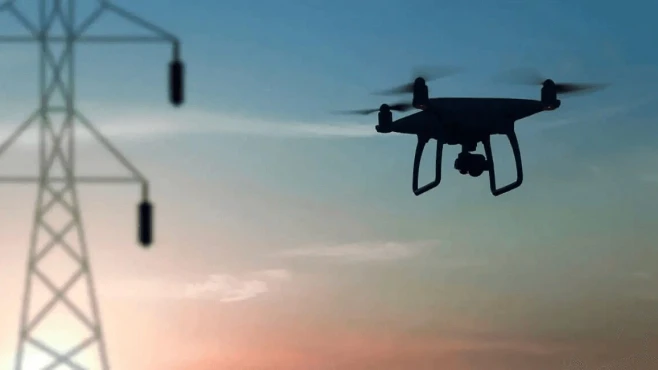
The potential for earnings embedded in data generated in energy processes is promising and should have even more relevance in the future. This future has already arrived for several agents in the sector, such as the use of drones: a tool that various companies can benefit from in terms of productivity, transparency, and energy efficiency. Learn more!
Speak with one of our specialists and discover how Pix Force can transform your business
How can drones improve your operations?
The use of drones offers safe and efficient inspections, as well as helping to collect data for companies across the energy sector. Trained pilots and experienced data analysts use drone technology to drastically reduce inspection time, save labor costs, and reduce hazardous working hours, while providing higher quality data, allowing companies to maximize energy production. The use of drones in transmission and distribution today opens up new possibilities and existing work. Without them, inspections are typically completed manually, using climbing, bucket trucks, long-range photography, or even helicopters. Clearly, manual inspections involving climbing or using buckets present risks that are avoided with drones. Ground-based data collection typically lacks the detail and flexibility that a drone can provide. Helicopters can capture data quickly and over large areas of land, but they are very expensive. They cannot operate near residential areas, for example, making the helicopter a less common resource. While we expect the benefits and use cases for drones to expand even further in the future, the technology currently available already offers significant benefits.
Better data using drones
Drones are easy to use and can conduct detailed inspections of up to 9 kilometers of distribution poles per day, capturing thermal and RGB imagery. Teams will benefit from a higher level of detail (compared to ground patrols and helicopters), such as missing pins, rust, and damaged insulators, through thermal imaging that can quickly identify hot spots on each tower. The more detailed and accurate data provided by a drone inspection can enable companies to proactively identify more defects, leading to fewer power outages and reduced repair costs.
Enhanced efficiency and reduced risk
Power utilities can tap into the huge potential of time and cost savings with drone inspections. For example, with a drone, substation inspections can be completed in an hour and there is no need for a shutdown. Over time, companies have found that "keeping feet on the ground" is one of the most obvious benefits of drones. Crews can get a close-up view of a potential defect without climbing or using a bucket truck. Drones can also help avoid risks related to trespassing on private property, accessing poorly maintained or dangerous areas within the right-of-way, and dealing with unfamiliar conditions after a storm.
Quick response
Drones can also provide valuable information after a natural disaster when ground conditions may be unknown and rapid response times are critical. The use of drones allows for quicker access to areas that may be blocked by water or fallen trees. Drones can gather information that can help you send the right equipment and crew to the right location to restore power as efficiently as possible.
Quick return on investment
Many of the commercial drones in use today are derived from the recreational drone market. The types of drones that are commonly deployed by ground crews for line inspections or post-disaster assessments rely on reasonable prices. Operation is also relatively simple, thereby facilitating adoption and allowing a quick return on investment. It is estimated that the cost of equipment, training, software, and support for an in-house drone program pays for itself 5 times over with just 50 miles of utility lines inspected plus 1 substation inspection.
Investments need to generate value
Technologies are always welcome when they help add even more value to what existed before, and it is no different in the electricity market. The focus is always on something that will improve service delivery as a whole. This is a significant change, with the potential to enable competitiveness in various sectors of the market, generating great benefits for Brazil as a whole.
Pix Grid: Transmission tower monitoring
Combining drone flights with Computer Vision technology and machine learning, Pix Energy is a solution targeted at monitoring and inspecting transmission towers, aiming to ensure this process is done more quickly, easily, and, most importantly, safely. Discover its main advantages: • Fast and automatic report generation
• More precise and automatic identification of points of interest
• Reduction of costs and risks in the maintenance process
Need services related to transmission tower monitoring by drones? Get in touch with one of our salespeople and discover Pix Grid.

Fabio Caraça
Fábio Caraça is the Chief Growth Officer at Pix Force. He leads Pix Force's transformation into a scalable SaaS operation, combining strategic vision, culture, and high-impact execution.