Occupational health and safety

Occupational risk management (ORM) is an essential practice aimed at identifying, evaluating, and controlling hazards present in work environments. With increasing concerns related to health and safety, the effective implementation of ORM becomes even more crucial to ensure the protection of employees.
This process not only provides a safer environment but also promotes productivity and the well-being of workers.
In this article, we will explore the main strategies and best practices for efficient risk management, covering everything from relevant legislation to the tangible benefits of this approach.
By understanding and applying the concepts of ORM, companies and professionals can build a healthier and safer workspace, reducing accidents and improving the quality of life for everyone involved.
Speak with one of our specialists and discover how Pix Force can transform your business
What are Occupational Risks?
Occupational risks refer to situations and conditions that can cause harm to the health and safety of workers in the work environment.
These risks can be classified into several categories, such as physical, chemical, biological, ergonomic, and psychosocial risks, each with its specific characteristics and potential impacts.
Physical risks include factors such as excessive noise, extreme temperatures, and radiation, which can harm health in the short or long term. On the other hand, chemical risks involve exposure to toxic or flammable substances, which can result in poisoning or accidents.
Biological risks arise from contact with pathogenic organisms, which can cause infectious diseases.
Ergonomic risks are related to inadequate postures and repetitive movements, which can lead to musculoskeletal injuries.
Finally, psychosocial risks involve factors such as work pressure, harassment, and stress, which affect the mental health of employees.
The identification and effective management of these risks are fundamental for promoting a safe work environment.
By implementing occupational risk management practices, companies not only protect the health of their employees but also foster a culture of prevention and safety, which is essential for organizational success.
The Importance of Risk Management
Occupational risk management is essential to ensure health and safety in the work environment. Its importance is reflected in several aspects, starting with the protection of workers.
With the systematic identification and assessment of risks, companies can implement preventive measures that minimize the chances of accidents and illnesses. This not only protects employees, but also demonstrates an organization's ethical and social commitment to the well-being of the team.
Furthermore, effective risk management contributes to improving productivity. Safe and healthy work environments result in lower absenteeism and greater employee engagement, which in turn translates into better results for the company.
Employees who feel safe are more likely to focus on their activities, reducing errors and increasing efficiency.
Another important point is legal compliance. Many jurisdictions require companies to adhere to occupational health and safety standards.
By adopting risk management practices, organizations ensure compliance with legislation, avoiding sanctions and fines that can have a financial impact.
Finally, risk management also strengthens the company's reputation. Organizations that prioritize occupational health and safety are viewed more positively by clients, partners, and society in general.
This reputation not only attracts talent but can also be a competitive differentiator in the market.
Therefore, occupational risk management is an essential strategy to promote a safe, productive work environment aligned with legal regulations, benefiting both employees and the organization itself.
Stages of Occupational Risk Management
Occupational risk management is a structured process consisting of four main stages: identification, assessment, control, and monitoring. Each of these stages plays a crucial role in creating a safe and healthy work environment.
• Identification: The first stage involves identifying all hazards present in the work environment. This can include physical, chemical, biological, ergonomic, and psychosocial risks. Identification can be carried out through visual inspections, questionnaires, interviews with employees, and analysis of the activities performed. The goal is to create a complete inventory that addresses all potential risks.
• Assessment: After identification, it is necessary to assess the severity and probability of occurrence of each risk. This analysis allows risks to be classified into levels, facilitating the prioritization of actions. Tools such as a risk matrix can be useful at this stage, as they help determine which risks require immediate attention and which can be monitored less frequently.
• Control: Based on the assessment, the next stage consists of implementing control measures to mitigate the identified risks. Control options include eliminating the hazard, substituting it with a safer alternative, implementing engineering or administrative controls, and providing personal protective equipment (PPE). Actions must be established in accordance with best practices and relevant regulations.
• Monitoring: The final stage involves continuous monitoring of risks and the implemented control measures. This includes conducting regular audits, correcting failures, and updating assessments as necessary. Monitoring ensures that risk management strategies remain effective and that the work environment stays safe over time.
Thus, occupational risk management is a continuous cycle aimed at protecting the health and safety of all employees, promoting a culture of prevention within organizations.
Tools and Methods for Identifying Risks
The identification of occupational risks is a fundamental step in risk management, and various tools and methods can be employed to ensure a comprehensive and effective analysis. Among the most widely used are inspections, checklists, and incident analysis.
Regular workplace inspections are essential to identify potentially hazardous conditions.
These inspections can be carried of by internal teams or external consultants and must be systematic, covering all areas and activities of the company. Direct observation allows for the identification of risks that may not be apparent in documents or reports.
Pix Force, through the use of drones and smart cameras, is able to perform inspections quickly and effectively, contributing to accident prevention.
Checklists are practical tools that help standardize the risk identification process. They contain a list of items and conditions to be checked during inspections.
Checklists ensure that no critical aspect is overlooked and are especially useful in complex environments or when new activities are introduced. Their structured nature facilitates comparison between different areas or periods.
Incident analysis is an effective tool that involves reviewing accidents and near-misses that have occurred in the organization. By investigating the causes of these incidents, it is possible to identify patterns and failures in work processes.
This approach provides valuable information that can be used to prevent the recurrence of similar problems. Furthermore, incident analysis can engage employees in discussions about safety, promoting a culture of prevention.
These tools, when used together, not only improve the ability to identify occupational risks but also help create a safer and healthier working environment.
Thus, by implementing these methodologies, organizations contribute to protecting the health and safety of their workers, aligning themselves with the best practices of risk management.
Inspection with artificial intelligence
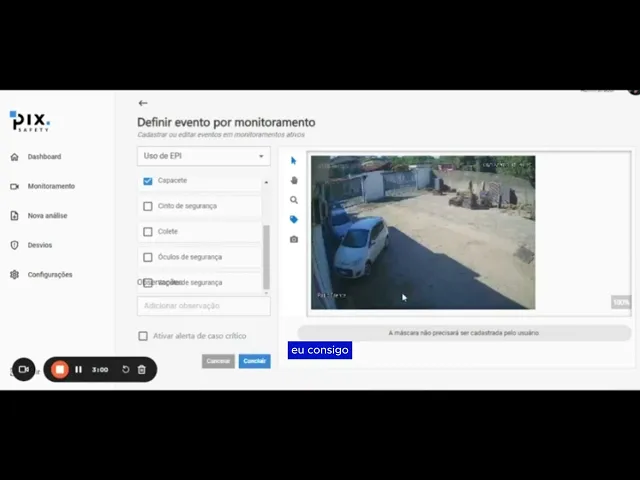
The implementation of Artificial Intelligence in occupational safety monitoring, through the Pix Safety solution, transforms ordinary cameras into powerful safety sensors.
This technology provides precision and efficiency in visual inspections, ensuring greater reliability and agility in processes. Easily integrated into existing security systems, Pix Safety allows real-time detection of deviations, such as the improper use of Personal Protective Equipment (PPE) and presence in risk areas.
Additionally, the platform offers an intuitive dashboard for auditing and training, collecting valuable data that assists in decision-making. By utilizing AI and Computer Vision, Pix Safety not only protects lives but also strengthens the safety culture in industries.
How to Implement Risk Management in Your Company
Implementing an effective occupational risk management program is essential to ensure health and safety in the work environment. Below, we present practical guidelines that can assist in this process.
• Team Formation: The first step in implementing risk management is forming a dedicated multidisciplinary team. This team should include representatives from different sectors of the company, such as occupational safety, human resources, operations, and even employees. The diversity of knowledge and experiences will enrich the risk analysis and the creation of appropriate solutions.
• Initial Diagnosis: Conduct an initial diagnosis to identify the main areas of risk. Use tools such as inspections, checklists, and incident analysis, ensuring that all employees can participate in identifying hazards. This not only promotes a safer environment but also reinforces the team's commitment to safety.
• Development of Protocols: Based on the identified risks, develop safety protocols and work procedures that include preventive and corrective measures. Establish clear guidelines on how to act in risk situations and ensure that this information is easily accessible to all employees.
• Training and Education: Promote regular training for all employees, covering not only risk recognition but also the importance of safety measures and the correct way to use them. Continuous training ensures that everyone is aware of the procedures and prepared to act in case of emergencies.
• Efficient Communication: Communication is fundamental in risk management. Establish open channels so that employees can report safety concerns or suggestions. Conduct periodic meetings to discuss the program's progress and integrate the lessons learned into the company's daily routine.
By following these guidelines, your company will be able to implement a solid and effective risk management program, promoting a safer and healthier work environment for everyone.
Conclusion
In conclusion, occupational risk management is an essential practice to protect workers' health and safety, promoting a safer and more efficient working environment.
The implementation of structured programs, which include the formation of multidisciplinary teams, risk diagnosis, protocol development, and continuous training, not only minimizes the likelihood of accidents but also values the safety culture within the organization.
Furthermore, effective communication across all levels of the company is crucial for the success of these initiatives. By encouraging employee participation in identifying and mitigating risks, companies not only demonstrate a commitment to safety but also foster a climate of trust and collaboration.
Thus, investing in risk management is investing in the well-being of employees and the sustainable future of the organization. Pix Force has the right technology for your company, meet Pix Safety!

Fabio Caraça
Fábio Caraça is the Chief Growth Officer at Pix Force. He leads Pix Force's transformation into a scalable SaaS operation, combining strategic vision, culture, and high-impact execution.