News
The transformation of the global energy sector is paving its way into the next decade. But do you already have an idea of what it will look like in 15 or 20 years? According to the report by the French consultancy Capgemini, “The Future of Energy,” this sector will evolve very differently depending on each geographical region, but in general everything indicates that it will be strongly influenced by the advent of new technologies, changes in consumer behavior, and political shifts. To arrive at these theories, the authors of the study based themselves on three main projections widely accepted by the international community. Firstly, that the world population will increase by 1.7 billion by 2040, mainly in urban areas. Secondly, that energy demand will increase by more than a quarter by that same year. And finally, on the improbability that the world as a whole will meet the goals established in the 2015 Paris Agreement, or in similar energy agreements. READ ALSO: • Drone inspection in Transmission Lines: advantages and disadvantages
• Computer Vision: a Complete Guide
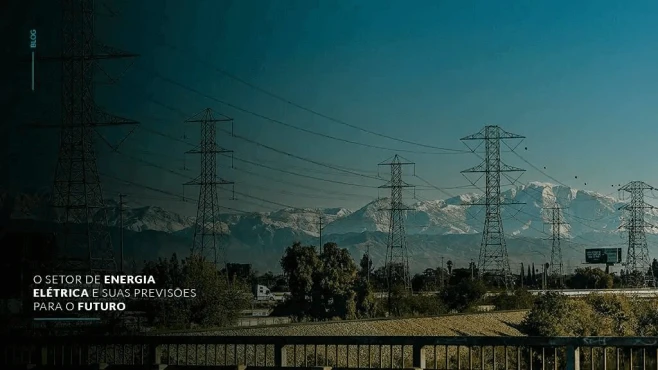
[caption id=”attachment_2920” align=”alignnone” width=”640”] The electric energy sector and its forecasts for the future[/caption]
Speak with one of our specialists and discover how Pix Force can transform your business
Predictions for the electricity sector
The forecasts for a heterodox group of countries, which brings together nations from both Southern Europe (such as Spain) and Latin America (such as Brazil), South Asia (such as Indonesia), and even some from Africa (such as Kenya and South Africa), are characterized by a massive use of fossil fuels, as well as by continuing to face major environmental challenges, such as local greenhouse gas emissions or waste management. It is estimated that, due to the impact of global warming, air conditioning systems will consume 40% of electricity, and as a result of potential demographic expansion in these countries, electricity consumption could almost double between 2025 and 2050. On the other hand, countries in Northern Europe, Australia, and in part the East Coast of the United States, have a high probability, according to the study, of achieving a process of decarbonization of the economy and an environmental “boom”, even while simultaneously increasing energy demand due to the consumption of new products and services. In the state of California, USA, for example, electric mobility will show one of the most remarkable developments in the energy market. Starting in 2040, due to local laws, 100% of all new vehicles will be required to run on renewable energy. [caption id=”attachment_2922” align=”alignnone” width=”640”] The electricity sector and its forecasts for the future[/caption]
The electric power sector in Brazil
In Brazil, according to the National Electric System Operator (ONS), the energy transmission sector will have an investment of R$ 12.8 billion by 2025, adding 3,000 kilometers of new transmission lines to the national system and a considerable increase in transforming capacity in new and existing substations. This increase in energy transmission infrastructure will certainly bring with it the need to increase overall productivity. For this, consequently, greater optimization of processes and prevention of technical problems such as wear and tear of transmission lines or generator overloads will be required. Furthermore, there is no doubt that, in the near future, the development of the various sectors of the economy will go strongly hand-in-hand with technological innovation and the application of all those processes that surround us today: Artificial Intelligence (AI), the Internet of Things, massive data analysis (Big Data), among others. These technologies will make a difference in industries, services, and, of course, also in the Energy sector. A clear example of the application of these technologies is in the power grid environment. In this world, thanks to IoT and 5G, billions of objects will be connected, generating a large amount of data. The use of data provided by generation, distribution, and consumption elements would improve the management of the power grid and energy savings.
Innovative Projects
An example of this is the European BD4OPEM project, which emerged with the goal of improving the operation and maintenance of electrical distribution networks. Funded by the EU with eight million euros, this project works on the development of a cloud-hosted platform that, supported by AI systems, will provide solutions in the extraction and use of massive data. Another notable project involving the application of new technologies in the energy sector is the Modeling of the Atmosphere and Solar Radiation (MATRAS) program. The initiative was developed by researchers from the University of Jaén in Spain, along with other universities in the field of AI. In short, the project's goal is to develop models capable of predicting the output of renewable energy plants in just a few minutes. In this way, it is possible to make optimized forecasts of solar radiation. [caption id=”attachment_2924” align=”alignnone” width=”640”] The electric power sector and its forecasts for the future[/caption] Furthermore, in the context of our country, innovative solutions like those offered by Pix Grid, a spin-off startup of Pix Force, came to optimize how the inspection and maintenance of power transmission lines are performed, which was previously done manually and inefficiently. Utilizing Artificial Intelligence and machine learning technology, the algorithms programmed by Pix Grid collect, store, and process large amounts of data to inspect transmission lines quickly, automatically, and effectively, considerably reducing the operational costs of this task, as well as the need to put human lives in danger. Would you like to know more about how Pix Grid's solutions benefit your company? Get in touch with us!

Fabio Caraça
Fábio Caraça is the Chief Growth Officer at Pix Force. He leads Pix Force's transformation into a scalable SaaS operation, combining strategic vision, culture, and high-impact execution.