News
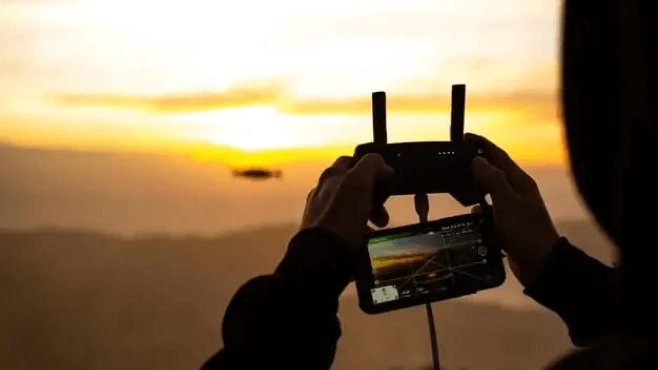
The model that took root in the collective imagination when talking about the use of drones was developed in 1977 by Israeli engineer Abraham Karem. At that time, 30 people were needed to operate the drone. Initially, the objective of unmanned aircraft was, basically, to carry out military missions that involved risk to human life. Among these missions were fire rescue and non-military security issues, which allowed the monitoring or attack of regions. It was not an apparently scalable tool at first. In Brazil, it was only in 1983 that the first unmanned aerial vehicle took flight. It was a BQM1BR model manufactured by the Companhia Brasileira de Tratores and its purpose was to serve as an aerial target. Since then, accompanying the boom in technological advancement and digitalization, the use of drones has undergone several developments and ceased to be a tool for military use. It is increasingly gaining popularity as a resource for photography and video, monitoring and surveillance, rescues, deliveries and many other uses. ALSO READ: • Computer Vision: A Complete Guide to resolve your doubts
• Drone inspection in the electrical sector
Speak with one of our specialists and discover how Pix Force can transform your business
UAVs x RPAS x Drones
Unmanned Aerial Vehicles (UAVs) is the official term designated by air transport regulatory bodies in Brazil. It refers to any equipment that enters the airspace without being manned by a human being. The difference between a UAV and a model aircraft is the purpose: model aircraft are used exclusively for recreational or competitive purposes. RPAS is the acronym for Remotely Piloted Aircraft System and refers to the entire set of resources required to launch a UAV. This includes the remote pilot, piloting station, launch and recovery equipment, etc. Drones is the colloquial term widely used in general vocabulary to refer to UAVs. In English, the word means “drone” (or male bee), an allusion to the loud buzzing sound the equipment makes during use, similar to the insect.
Drone use: Expanding market
With a market share in the range of US$ 14 billion, drones are gaining more space in the global market. This was the point made by Forbes magazine in 2019, when evaluating the global market for the tool. In Brazil, applications are divided into about 40% in the infrastructure sector, 25% in agriculture, and the rest with the mining, entertainment, security, and logistics sectors. The trend is for this market to continue expanding, as predicted by Drone Industry Insights, which projects a market share of US$ 44.1 billion for 2024. It is practically impossible to separate such growth from technological implementations in drones and their increasingly technical and sophisticated uses in solving human problems. In addition, the use of drones in precision agriculture is reflected in the statistics, with the agricultural sector appearing as the second largest user of drones in Brazil.
Why are drones so popular?
The popularity of drones is mainly due to their ease of use and problem-solving capabilities. Manual and/or risky tasks can be streamlined, optimized, and facilitated with the use of drones instead of human labor. Furthermore, drones add value to services and businesses. The potential for use and development is enormous, offering disruptive solutions for all sectors of the Industry. The use of drones also follows the same direction as Industry 4.0, automating, digitizing, and revolutionizing work methods and industrial production on a global scale. Among their main benefits are risk reduction, both for humans and production; cost reduction in tasks that require time and great effort, such as remote and risky maintenance and inspections (in this field, the inspection of power transmission towers, one of Pix Force's projects, is a great example of the advantages of using drones); improvements in quality and speed of services and products; and assisting in quick and practical decision-making.
But how to make the use of drones scalable?
According to ANAC, the operation of drones in visual line of sight consists of an operation under visual meteorological conditions, that is, which allow the pilot to maintain direct visual contact with the drone at all times. This must be done in such a way that the pilot can perform the flight without the aid of flight controllers and can observe the handling of the equipment on their own. The objective is to avoid collisions with other drones, aircraft, and obstacles. For drones to expand even further and explore new disruptive and truly innovative potentials, it is also necessary to explore Unmanned Aircraft System Traffic Management (UTM). UTM is a subsystem of ATM (Air Traffic Management), the same system that manages airplane, helicopter, and other manned aircraft flights. However, it is a division created specifically to deal with RPAS and encompasses both aerial and ground functions. It is an infrastructure that allows drones to understand the conditions of the world around them and exchange information with other drones, manned aircraft, airspace operators, and other stakeholders.
What to expect for a not-so-distant future?
From smart deliveries to flying cars: reality is moving more and more in this direction. What can make this possible is the implementation of UTM, and drones are the first step toward successful sharing of an already congested airspace. Through the exchange of communication, data, and "deconfliction" (minimizing the risk of aerial incidents as much as possible), the foundations of a thriving economy for drones are deployed in an efficient, reliable, and scalable manner. Currently, there is already enough UTM technology to show in practice that it is possible to make drones a technology that is part of everyday life, in more complex and sophisticated operations. Despite this, this technology is still in its infancy and has a long way to evolve and improve before being solidly robust. The foundations are being laid, but there is still a long way to go before the drone business becomes fully scalable. Navigation and connectivity technologies are two key factors for transitioning the drone business into a scalable business even at high levels.

Fabio Caraça
Fábio Caraça is the Chief Growth Officer at Pix Force. He leads Pix Force's transformation into a scalable SaaS operation, combining strategic vision, culture, and high-impact execution.