News
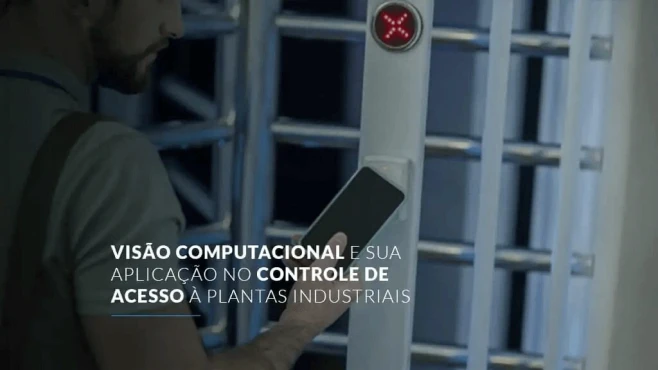
As we have already discussed in previous articles on our blog, computer vision is part of a complex smart manufacturing approach that allows computers and machines to 'see' the physical world, enabling them to extract, process, and analyze information from visual inputs. But today, we are going to address the advantages that this technology provides in controlling access to industrial plants. Stay with us in this article and learn more! Employees in various industries often work in extremely hazardous conditions, where the risk of injury is quite high. As such, factories are required to comply with safety regulations enforced by government authorities, and companies that fail to meet these standards are usually penalized. Depending on the industry and the work environment, there may be different requirements for workers to enter industrial plants. For example, wearing personal protective equipment, uniforms, technical maintenance devices, hospital or laboratory clothing, emergency kits, or vehicle equipment. However, it is difficult to keep track of every worker and supervise whether they follow the rules properly. Even though factories have cameras installed to monitor employees' movements in industrial plants to ensure safety standards, most industries perform this inspection through a manual monitoring process, in which an employee must sit and constantly monitor the video feed. These manual processes are prone to being ineffective, as reviews conducted by the human eye can be subject to various common errors that may go unnoticed. In order to avoid greater consequences that can put the worker's life and the industrial process itself at risk, it has become extremely necessary and beneficial for factories to digitally transform and automate the way individuals entering and leaving the plants are monitored. To help employers clearly understand their factories' internal processes, as well as to improve the efficiency, reliability, and speed of inspections, companies like Pix Force have developed solutions such as Pix Safety, which use computer vision algorithms that have completely changed these processes in national industries. The method is based on deep neural network capabilities for image pattern recognition, turning simple cameras into powerful tools that use Big Data to analyze in detail the patterns of each individual and also to recognize various types of objects. This process allows, in a simple and precise way, the identification of workers who violate health and industrial safety regulations. When operating in conjunction with the local cameras, the Pix Safety smart solution can constantly monitor both the production area of the industrial plants and the entry and exit points of the site. Even if there is only a minor violation of the regulations, the system reports it to the respective manager and also alerts the employees. In this way, manufacturing companies can ensure that their employees adhere to safety and protection standards. In the event of identifying an active accident, the computer vision system can alert managers and staff about where it occurred and its intensity, so that the production process can be halted in that specific area and proactively ensure employee safety. Taking all of the above into account, it is possible to identify that computer vision can make access control to industrial plants:
Speak with one of our specialists and discover how Pix Force can transform your business
More precise
The adoption of computer vision-based solutions allows factories to achieve near-perfect levels of precision in production and quality control.
More efficient
Not only does a fully automated system operate much faster, but it can also run 24 hours a day, every day of the week.
More repeatable
In repetitive tasks, such as inspections of individuals in a factory, computer vision-oriented solutions are more effective, as there is no need to train or retrain people to dedicate themselves solely to this task.
Cheaper
In addition to being able to reduce labor costs due to the lower need for employees to control the process, this technology opens up less margin for errors or deviations from standards, causing the overall quality of the product to be better, and there to be less waste. In addition to inspection through the correct use of PPEs and access to its auditable system, Pix Safety also has a tool inventory. There are sectors where the inventory needs to be monitored and verified periodically at employee entry and exit locations. The purpose of this periodic monitoring is to prevent accidents or problems in the production process due to forgetting any of these tools. With this in mind, our team implemented a software alongside Pix Safety to determine the type and number of tools, including specific dimensions at the entry of special units, identifying more than 1000 tools 100% automatically. Along with the growing interest in disruptive technologies and the new trends of process digitalization in the Brazilian and global markets, companies are paying more attention to the technological advances that computer vision offers. According to several researches, it is one of the most widely adopted technologies, and the innovative advantages it brings to the most diverse industries opens margin for a greater future exploration of this technology on a massive scale. Learn more about the computer vision solutions that Pix Safety can offer you. Access www.pixforce.ai and contact our team for more information.

Fabio Caraça
Fábio Caraça is the Chief Growth Officer at Pix Force. He leads Pix Force's transformation into a scalable SaaS operation, combining strategic vision, culture, and high-impact execution.