Energy
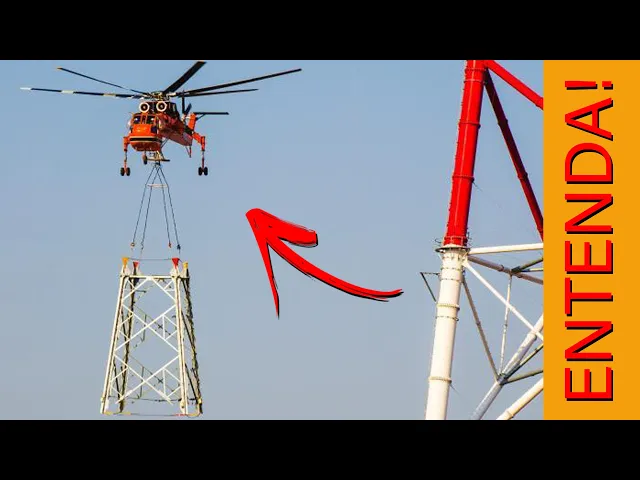
Many electric power utilities have a somewhat "tedious" view regarding the inspection of power transmission towers. Many companies may still say that it is a time-consuming and expensive service, as it requires a helicopter to perform any type of maintenance. But a service like this is fundamental to guaranteeing power distribution in a country. Not to mention that it is impossible to imagine operating a power transmission and distribution network without considering the minimum maintenance necessary to guarantee this operation. The key word for such a process should no longer be seen as "tedium" but rather as "efficiency" and "automation." This type of association may not have been made in the past, but today it is starting to be part of the present and will be indispensable in the future. Learn more! READ ALSO: • Drone inspection in Transmission Lines
• Computer vision: a complete guide!
• The electric power sector and its predictions for the future
Speak with one of our specialists and discover how Pix Force can transform your business
What are power transmission towers?
Power transmission lines are vital components of the electrical system, responsible for the efficient transport of electricity generated in power plants to distribution centers and end consumers. These structures consist of metal towers that support high-voltage cables, enabling the safe conduction of energy over long distances. There are different types of transmission towers, each with specific functions, such as suspension, terminal, tension, and transposition, which can be combined as needed. Transmission lines and their towers are often considered a form of visual pollution, but measures such as underground wiring can be adopted to minimize this impact. To ensure the proper performance of transmission lines, it is essential to consider factors such as the frequency and duration of interruptions, as well as the incidence of lightning strikes. In Brazil, where soil resistivity influences insulation standards, it is common to use shield wires and devices to improve lightning protection, connected to the tower groundings.
How does energy tower maintenance work?
In a not-too-distant past, inspecting a power line was an inevitably manual job. Teams would be sent to inspect the assets in person. This boils down to climbing the towers, inspecting the vegetation, and covering dozens of kilometers in a single day. For companies operating smaller networks, from 1,000 to 2,000 kilometers, this might even be considered a practical distance. But for the world's large utilities, covering vast areas requires efficiency in a short span of time without employing a small “army of specialists.” And this type of operation tends to be expensive. However, this was the only option available in the past, and just having periodic maintenance of power transmission towers was already better than having no resources at all. With this in mind, utilities had to be smart about prioritization, based on the knowledge and experience of the teams that were in the field. See how power transmission towers work: https://www.youtube.com/watch?v=lwgbucq2rno
Main questions about power tower maintenance
Thus, during the maintenance of the power towers, numerous questions arose such as: • Which lines needed maintenance?
• Which towers actually needed improvements?
• Which areas do we know exhibit vegetation growth and could be harmful to the entire network?
• Where are the most important operational points of the network?
Without a doubt, all these questions, when answered by a team, relied on subjective prioritization, as did their decision-making. Later, ground crews would be augmented with visual inspections by helicopter. Eagle-eyed inspectors could cover a vast amount of ground and point out areas of interest for more in-depth ground inspection. State-of-the-art cameras were also used to capture images for later study. Without a doubt, this was a major step forward. However, the same problem remained: ultimately, it was a fairly manual process, still very expensive to gather practically the volume of information needed to actually monitor an entire grid, and decision-making was not based on facts.
How is the inspection of transmission towers carried out?
For many utilities, the present still looks a lot like the past. But for grid operators aiming for the future, technology and capabilities are advancing rapidly in several ways. On one hand, the possibilities for data capture by helicopter have expanded considerably. Human inspectors used to stand on the outside, now being updated by a variety of cameras and sensor systems capable of capturing a vast amount of data. In addition to standard (but high-quality definition) cameras, there is the use of technology such as thermal imaging to identify hotspots and hyperspectral imaging, which can use different wavelengths of light to identify plant species.
What it was vs. How it is
In the recent past, helicopter payloads were limited for each operation. To capture all of these data points, multiple flyovers of the lines would be required, changing the payload with each trip, making it an impractical operation. As such, utilities again had to prioritize which data they should collect. For most, this is still the "modus operandi", although the latest iterations of these technologies can now fit into a single payload. Another major leap forward in recent years has been the introduction of unmanned aerial vehicles (drones). Aerial inspection drones, equipped with advanced cameras, can be used to increase the efficiency of inspection teams on the ground. Practically speaking, they do not match helicopters in terms of range or breadth of functionality, but they vastly improve the reach and productivity of inspection teams by orders of magnitude, increasing the coverage, volume, and quality of data capture.
The importance of data
It's not new that data and information are worth a lot. An inspector looking out the side of a helicopter or up a utility pole is essentially collecting data and information for future decision-making. Based on this logic, some of the biggest leaps in power asset inspection come from technologies that collect data in an advanced way today. New ideas emerge from the cross-referencing of various optimized data streams, thus building a single, coherent view of the network according to different metrics. New technologies are born practically every day, such as artificial intelligence (AI) and machine learning, which are making the whole process even faster and easier. For example, machines learn how to identify which parts actually need to be replaced in each inspection.
Power tower maintenance using drones: how does it work?
New technology is usually an upgrade of current technology. Thus, today's standard practice often seems like the best practice compared to the past, but we should expect new technologies to become standard soon. But what will best practices look like in the near future? First, we can expect digital approaches to become more ingrained and more useful over time. The digital twin stops being an innovative new solution to become the baseline from which decisions are made. New programs and applications, to make fuller use of the data produced, enter development. As data history increases, artificial intelligence and machine learning applications become more precise and valuable every day.
Digital tools for tower inspection
We can also expect drones to become much more advanced than what we know today. It is true that regulations limit drone operations to the line of sight. But in the near future, this will not be a restriction, allowing drones to cover even more ground. They will eventually operate largely autonomously, traveling between charging pads (perhaps integrated with distributed energy resources like batteries and solar) and continuously inspecting the grid without human control. This will greatly increase grid coverage and reduce the intervals between inspections, creating even more optimized data. We can also expect integrations with other types of data to enrich the picture for asset inspectors. An obvious candidate here is satellite data, which could provide high-level data over a wide area very quickly, complementing granular data collected close to the ground to enable change detection. But wider integrations are also possible.
The future of transmission tower inspection
Along with power asset and transmission tower inspection solutions, companies are also investing in technologies such as grid current and voltage monitoring, power quality analysis, and fault management. Through drones, this task is more efficient. The use of drones in transmission tower inspections can be useful not only for the towers themselves, but also ensure several benefits at different points of the operation:
Site selection
Using drones equipped to map vegetation, terrain, and water resources can confirm the first visit of an inspection, capturing information only about the ground.
Pre-construction
Gathering aerial data to reproduce later through digital devices will help assess sites before a tower installation.
Construction progress monitoring
Capturing aerial imagery to track progress and accurately manage the scope, schedule, and cost of a tower installation.
Pre-operation inspection
Using drones to ensure all tower components are ready before activation, minimizing the risk of accidents before the tower's first operation.
Transmission tower maintenance
Through drones, it becomes much easier to produce maps and models to assist in the necessary planning and mapping that this type of work requires. Pix Grid, Pix Force's tower inspection solution, combines drone flights with Computer Vision and machine learning technology, making it a targeted solution for transmission tower monitoring and inspection. A process made faster, easier, and, above all, safer is the main goal. Want to know more about transmission tower inspection? Get in touch with us!

Fabio Caraça
Fábio Caraça is the Chief Growth Officer at Pix Force. He leads Pix Force's transformation into a scalable SaaS operation, combining strategic vision, culture, and high-impact execution.